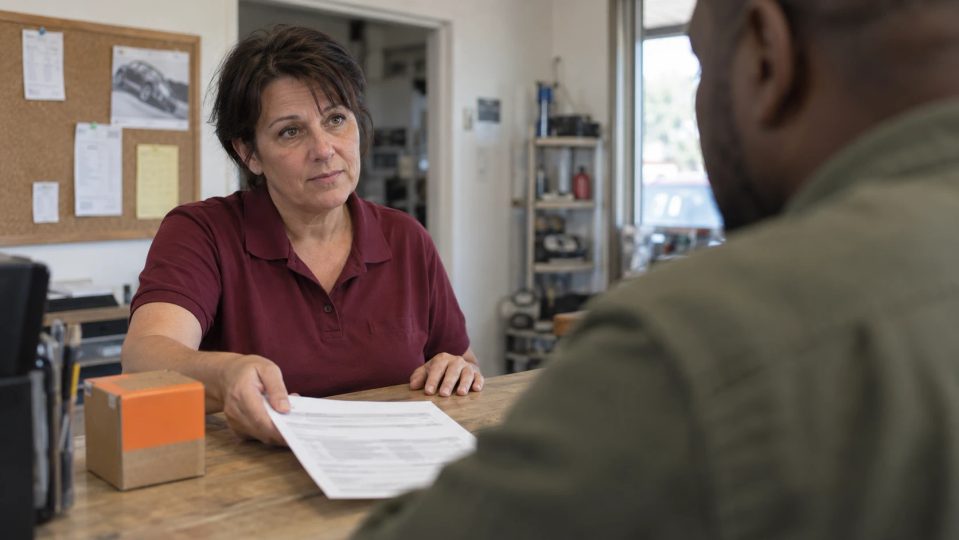
Why field reps don't want their conversations transcribed, and what to send to the CRM instead
In automotive aftermarket distribution, the visit is the whole business. Here's why a clean summary beats a full transcript, and how it turns into CRM data your team will actually trust.
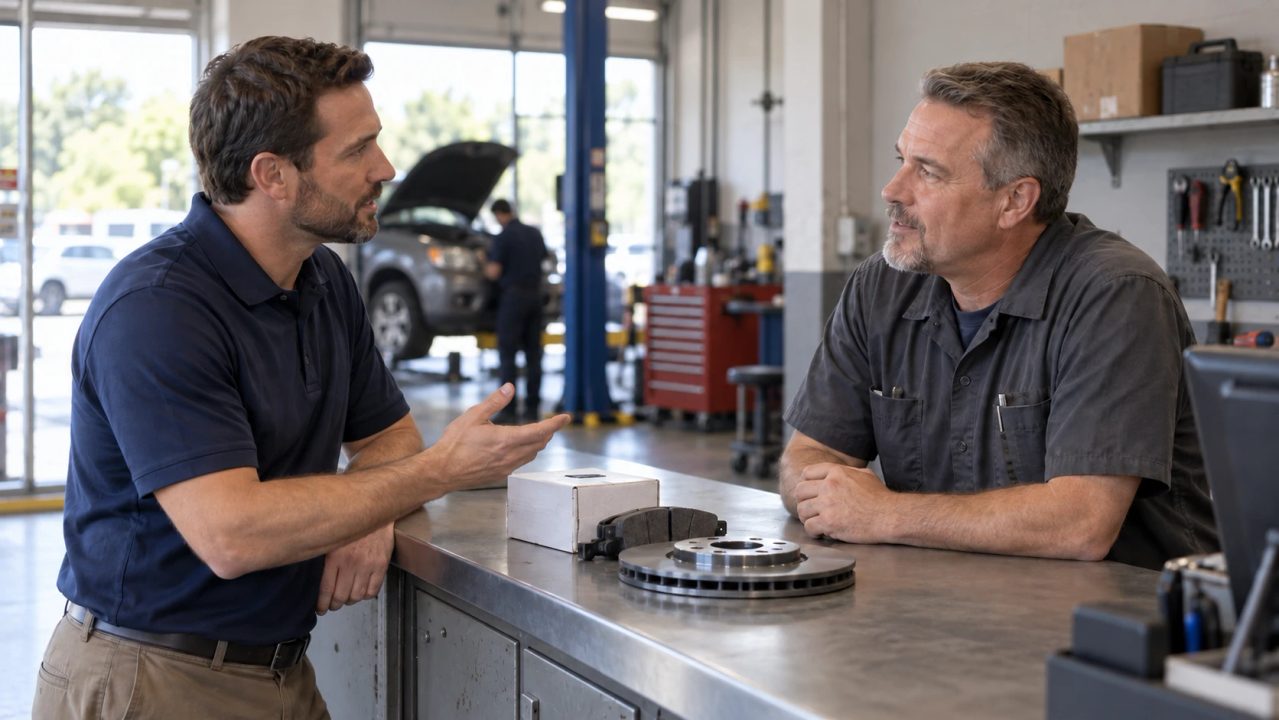
The visit is still where the business gets done
For distributors moving parts through DIFM and DIY channels, whether that's a national retail account, a local parts store, or a lubricant delivery route, the relationship between a rep and a counter manager is still the thing that decides who gets the order. Pricing matters. Fill rate matters. But the account only stays healthy if someone from your team is standing at that counter, hearing what's actually going on: a competitor undercutting on a category, a service bay about to add a lift and needing new accounts set up, a manager who's been burned by a late shipment and is one bad week from switching suppliers.
None of that shows up in an order history report. It shows up in a conversation. Which is exactly why so many distributors have tried to capture it, and why most of those attempts have failed.
Why "just record everything" backfires
The instinct is obvious: reps are already having these conversations, so why not record them and hand corporate a transcript?
Because reps won't let you. Not maliciously, just practically. A rep who knows every word they say at a counter is getting logged verbatim starts talking differently. They hedge. They stop making the small talk that actually builds trust. They stop admitting when a shipment was late or a product had an issue, because that admission is now permanent and searchable. A transcript doesn't capture a relationship. It captures a deposition.

And the reps who don't change their behavior create a different problem: nobody at corporate has two hours a day to read transcripts either. A full transcript isn't information. It's raw material that still needs a person to turn it into information, which is the exact job everyone was trying to automate in the first place.
A summary is the right altitude
The fix isn't recording less. It's surfacing less of the wrong thing.
A good visit summary doesn't preserve the conversation. It preserves the parts of the conversation that are actually a business record: what was committed to, what was flagged as a risk, what came up that looks like an opportunity, and what needs to happen before the next visit. Everything else, the small talk, the venting, the parts of the conversation that only make sense in the moment, gets left out on purpose.
That's not a limitation. It's the feature that makes the whole system trustworthy. A rep who knows the output is a summary, not a transcript, will actually talk the way they'd talk to a customer they've known for ten years, because they know the record reflects the substance of the visit, not a searchable archive of every word.

From summary to CRM, without the rep touching either

The reason this matters beyond trust is what a structured summary can do once it exists. A transcript is just text. A summary built with the CRM in mind is closer to a form that's already been filled out.
A mentioned competitor pricing move becomes a flagged risk on the account. A comment about an upcoming lift installation becomes a new opportunity with a product category attached. A promise to follow up on a warranty claim becomes a task with an owner and a due date. None of that requires the rep to remember to open the CRM after a twelve-stop day. It requires the summary to already be shaped like the fields it's going to fill.
That's the actual admin tax field teams pay today: not the visit, the translation of the visit into a system nobody has time to update by hand. Fix the shape of the summary, and the CRM update stops being a separate task.
What it looks like on the route
A rep pulls into a parts store, checks in with the manager for fifteen minutes, and drives to the next stop. By the time they're parked, the visit has already become three action items, one flagged pricing risk, and a note that the store is adding a service bay next quarter. Corporate sees an account that's actively being managed. The rep never opened a laptop.
That's the bar. Not more data. The right data, shaped so it updates itself.